Recently, the Environmental Protection Agency (EPA) had a proposed change in interpretation of parts of the Clean Air Act. The Clean Air Act requires companies that want to build large facilities that will create major amounts of pollution to undergo New Source Review. This review process involves presenting plans to communities, receiving community input, obtaining air pollution permits, and much more. The community involvement and input is required to happen BEFORE the company gets its air permit.
“In the CAA Amendments of 1977, Congress established the NSR preconstruction air permitting program to require stationary sources of air pollution with air emissions above certain thresholds to obtain permits prior to beginning construction. This component of the CAA is designed to, among other purposes, ensure that development will occur in a manner consistent with the preservation of air quality.” From the EPA proposed rule. Because of this law, EPA only allowed a limited set of actions before the company got the air permit: they could make plans, clear and grade the site, and order and store some equipment.
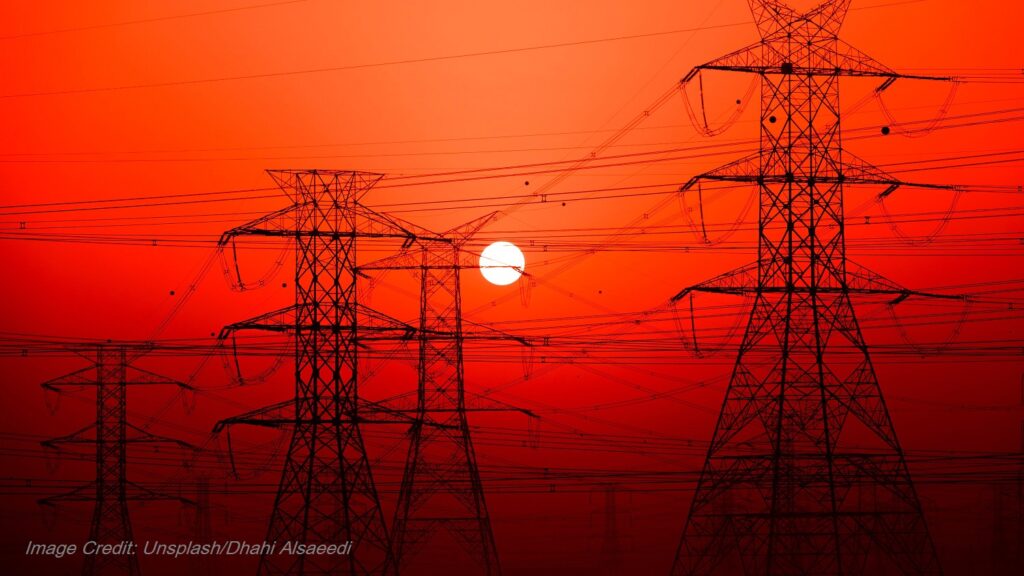
In the new proposal, EPA wants to allow companies to do much more: install utility infrastructure (electric lines and water pipes) make concrete pads, build some types of buildings and building components, as long as it is not the actual machine that makes the pollution. For example, a power company wanting to build a new methane power plant could make the concrete pad foundation, build electrical and water supply lines and pipes, and have almost the whole building built – everything ready to just drop in the methane gas turbines. This turns history and the intent of Congress on its head.
EPA took public comments, and here is Dr. Anne comment for Mothers & Others For Clean Air. (The comment period is now closed)
—-
I’m a pediatrician who has specialized in environmental health for 30 years. I am submitting a comment on behalf of Mothers and Others For Clean Air. We strongly oppose EPA’s proposal to change the definition of “begin actual construction” for the New Source Review process. This change would damage children’s health, and it is harmful for the whole community.
This proposal would let companies begin construction before they get an air pollution permit. Companies could do major construction before parents and communities have any input on what is happening to them. Right now, companies can’t break ground until they get their air pollution permit. As part of the permit process, documents and plans have to have full public review, including expected increases in air pollution and control methods the companies plan to use. Parents and community members are able to attend hearings or submit comments. But under this proposal, companies could cut down trees, build foundations, build roads, electricity, plumbing, drainage and other site infrastructure, before they apply for a permit. Because the cost and investment could be in the millions, it will be difficult for communities to stop construction. They will have no input on whether the facility is near schools, playgrounds, or homes. This would severely damage children’s health. The likely industries that would use this plan include data centers, power plants, petroleum and plastic refining, processing, and manufacturing plants, other fossil fuel infrastructure, and biomass.
All of these industries make air pollution that consists of PM2.5, NOx, VOCs, and other hazardous air pollutions.
PM2.5 damages children from before they’re born all the way through the teen years. It causes preterm birth, low birthweight, decreased cognitive development, damaged (stunted) lung growth, it causes asthma and asthma attacks, it affects children’s ability to learn in school, and it affects children’s mental health. PM2.5 causes lung disease, heart disease, strokes, dementia, and cancer in adults.
VOCs cause many different effects depending on what chemical they are. Some cause headaches and other central nervous system problems, some cause cancer, some cause other problems in the body. This proposal fails to protect vulnerable groups, such as children, elders, and communities of color, by preventing the opportunity for public input before construction begins. It is especially harmful to communities that have historically been excluded from economic and cultural opportunities, and still lack the resources to be able to address a built environment that damages health.
The whole point of New Source Review in the Clean Air Act is to allow communities the ability to review plans and weigh in before anything is built. The whole point of the Clean Air Act is to protect our children’s and our health. EPA’s primary mission is to protect the environment in order to protect our health.
This proposal does not protect health, it damages it. It is the exact opposite of what EPA is supposed to do.
Children do not choose where they live, where they go to school, or whether the air they breathe is healthy and clean. They do not decide whether industrial facilities are across the street from their schools, playgrounds, or homes. Adults make these decisions for them, and we have the ethical and fiduciary responsibility to make sure that all children in the U.S. have the opportunity to learn, grow and thrive.
This proposal is the opposite of protecting health, it undermines the purpose and intent of the Clean Air Act and New Source Review. Therefore, I and Mothers and Others For Clean Air strongly oppose this proposal.
References:
1. Association of Improved Air Quality with Lung Development in Children, Gauderman et al, NEJM. https://doi.org/10.1056/NEJMoa1414123
2. Maternal exposure to air pollution and risk of autism in children: A systematic review and meta-analysis. Chun etal, Environmental Pollution. https://doi.org/10.1016/j.envpol.2019.113307
3. Healthy Air, Healthy Brains: Advancing Air Pollution Policy to Protect Children’s Health. Payne-Sturges et al, AJPH. https://doi.org/10.2105/AJPH.2018.304902
4. Global mortality from outdoor fine particle pollution generated by fossil fuel combustion: Results from GEOS-Chem. Vohra et al, Journal of Environmental Research. https://doi.org/10.1016/j.envres.2021.110754
5. Exploration of the Global Burden of Dementia Attributable to PM2.5: What Do We Know Based on Current Evidence? Ru, et al, GeoHealth. https://doi.org/10.1029/2020GH000356
6. Air pollution deaths attributable to fossil fuels: observational and modelling study. Lelieveld et al, BMJ. https://doi.org/10.1136/bmj-2023-077784
7. A systematic review of low-level ambient fine particulate matter (PM2.5) exposures and adverse cardiovascular health outcomes. Roper et al, Environmental Pollution. https://doi.org/10.1016/j.envpol.2026.127978
8. Association between county-level coal-fired power plant pollution and racial disparities in preterm births from 2000 to 2018. Daouda et al, Environmental Research Letters. https://doi.org/10.1088/1748-9326/abe4f7.
9. Association of Air Pollution and Heat Exposure With Preterm Birth, Low Birth Weight, and Stillbirth in the US – A Systematic Review. Bekkar et al, JAMA Network Open. https://doi.org/10.1001/jamanetworkopen.2020.8243
10. Benefits of Reducing Prenatal Exposure to Coal-Burning Pollutants to Children’s Neurodevelopment in China. Perera et al, Environmental Health Perspective. https://doi.org/10.1289/ehp.11480 or https://pubmed.ncbi.nlm.nih.gov/18941584/
11. Impact of low-level fine particulate matter and ozone exposure on absences in K-12 students and economic consequences. Mendoza et al, Environmental Research Letters. https://doi.org/10.1088/1748-9326/abbf7a
12. Pediatric Psychiatric Emergency Department Utilization and Fine Particulate Matter: A Case-Crossover Study. Brokamp et al, Environmental Health Perspective. https://doi.org/10.1289/EHP4815 or https://pubmed.ncbi.nlm.nih.gov/31553231/
13. Association of Air Pollution Exposure in Childhood and Adolescence With Psychopathology at the Transition to Adulthood. Reuben et al, JAMA Network Open. https://doi.org/10.1001/jamanetworkopen.2021.7508
07/01/2026 AKMB