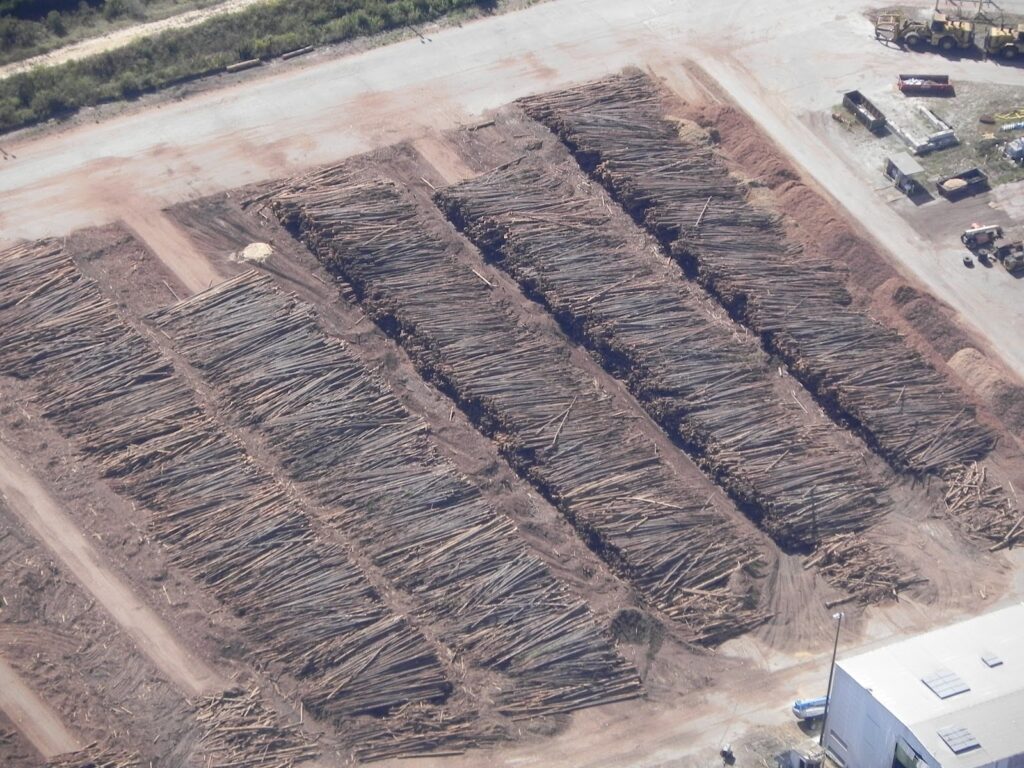
Log yard of whole trees at Enviva Waycross. Photo credit: Dogwood Alliance
This blog was authored by Dr. Treva Gear, Georgia State Manager for Dogwood Alliance, in honor of the International Day of Forests.
What is biomass?
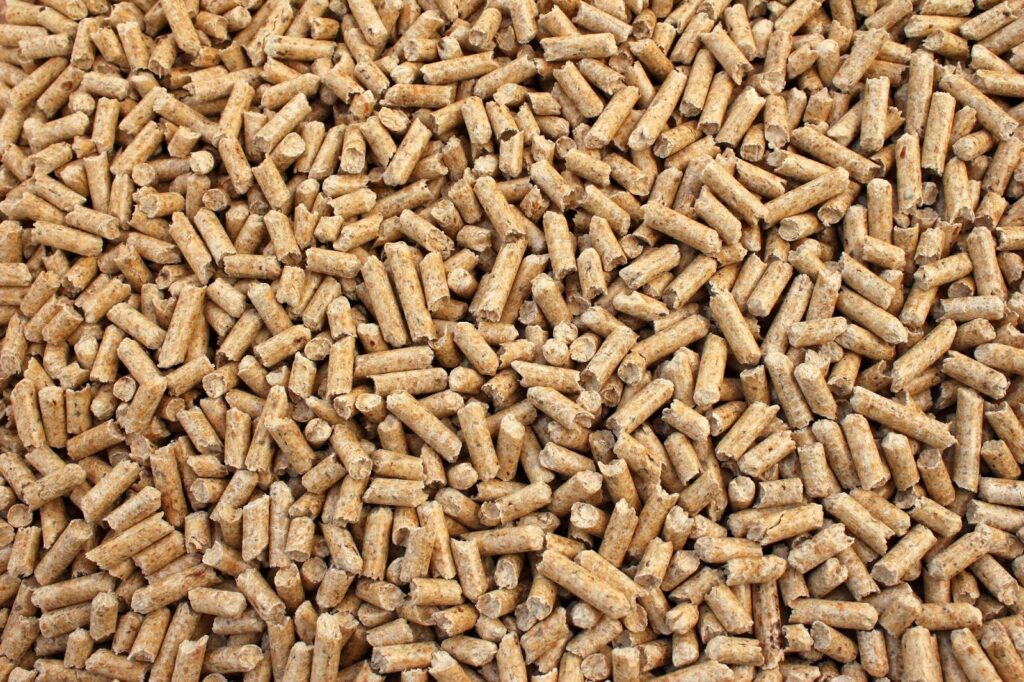
Biomass, or bioenergy, creates energy by burning living materials like plants and trees. Many wood pellet biomass plants in the US South use trees to create wood pellets that are shipped overseas to Europe and Asia. Some companies use boilers. A boiler works by burning wood pellets or wood chips as fuel to generate heat and electricity.
Biomass in Georgia
Woody biomass pellet plants continue to expand or increase production in Georgia. Georgia is number one for timber and continues to support extractive industries like the woody biomass industry. It is home to Enviva, FRAM Renewable Fuels, and other smaller wood pellet industry names. Georgia is also one of the largest producers of woody biomass-generated energy in the U.S. Biomass facilities are not good for our forests, our economy, or our communities.
Biomass & pollution
Biomass burning and biomass pellet production produces toxic air pollution. These include particulates (fine dust), carbon monoxide, nitrogen, and other hazardous air pollutants. Pollutants like these cause many health problems. Fine dust, called PM2.5, is especially harmful. PM2.5 can get into the lungs and bloodstream. PM2.5 can hurt lung function, worsen asthma, and cause heart attacks and premature death.
Biomass burners are as dirty and problematic as coal plants. Wood pellets are not carbon neutral. The production and combustion of wood pellets creates 50% more carbon dioxide than coal.
History of violations
The woody biomass industry has a history of violations. Every wood pellet plant in Georgia has been in violation of its air permit. The Beasley Group, the owner of FRAM Renewable Fuels (wood pellets), Green Power Solutions (biomass power plant), and the owner of Altamaha Green Energy (proposed biomass boiler). The Beasley Group has violated its air permit at all of its FRAM locations across our state. The violations range from failure to operate pollution controls properly, bypassing pollution controls, and exceeding hazardous air pollution limits.
Biomass is expensive and inefficient
Biomass electricity is costly to ratepayers. It costs more than other proven renewable energy. Bioenergy has been an expensive failure. In Gainesville (FL) and Austin (TX), biomass operations were money pits.
Research has shown that burning biomass is not clean, green, or renewable. Burning wood is a primitive and inefficient energy option. In a blackout during December of 2022, only 63 of 330 MW’s of biomass-produced energy in Georgia was available. This is a 19% efficiency. Based upon the 20% efficiency rate, only 13.3 MW of the planned 70 MW from the proposed Altamaha Green Energy (Jesup) plant will be available. The majority of the energy will be released as steam.
Biomass harms forests
Woody biomass companies cut trees to burn for energy. High demand for biomass opens up more forests to logging. Logging for wood pellet biomass has clearcut more than 900,000 acres in the US South in the last decade. Southern forests provide many benefits to humans. They provide us with oxygen to breathe, clean water, and homes for animals. Forests also provide us with food, medicine, and materials for clothing and shelter. Forests are a vital part of our planet and are necessary for our survival.
Say no to dirty biomass in Georgia
The state of Georgia is in an energy crisis. It has opened its doors to over 100 AI data center projects without a clear plan on how power will be provided. With two pulp mills closing on the coast of Georgia, the Rural Development Committee (legislators) proposed that burning woody biomass for AI data centers would be a great way to lift the timber industry. There is not enough woody biomass available to power an AI data center.
Domestic biomass burning is being touted as a new alternative at the cost of deforestation, increased pollution, human health, climate change and higher electricity rates. For example, Altamaha Green Energy (AGE), the latest proposed 70 MW biomass-burning plant in Georgia, will cost Jesup residents their health and their income.
What else can you do to help?
We need Georgians to raise their voices! The state of Georgia must stop handing out taxpayer funding and greenlighting permits for the expansion of the wood biomass industry.
Author
Dr. Treva Gear is the Georgia State Manager for Dogwood Alliance. She is also the founder and chair of the Concerned Citizens of Cook County, a community grassroots organization in Adel, Georgia. She is an Army veteran, an educator, and a community organizer. She believes in being the change that she wants to see in the world and doesn’t mind “getting into good trouble.” Dr. Gear holds a doctorate in Adult and Career Education from Valdosta State University.