An overview of how data centers work and how they impact Georgians
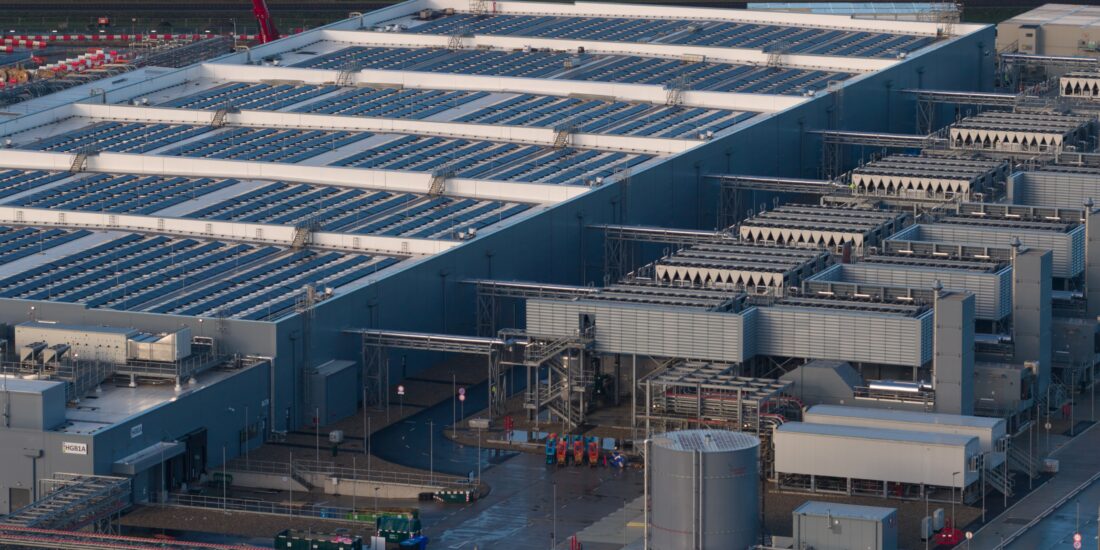
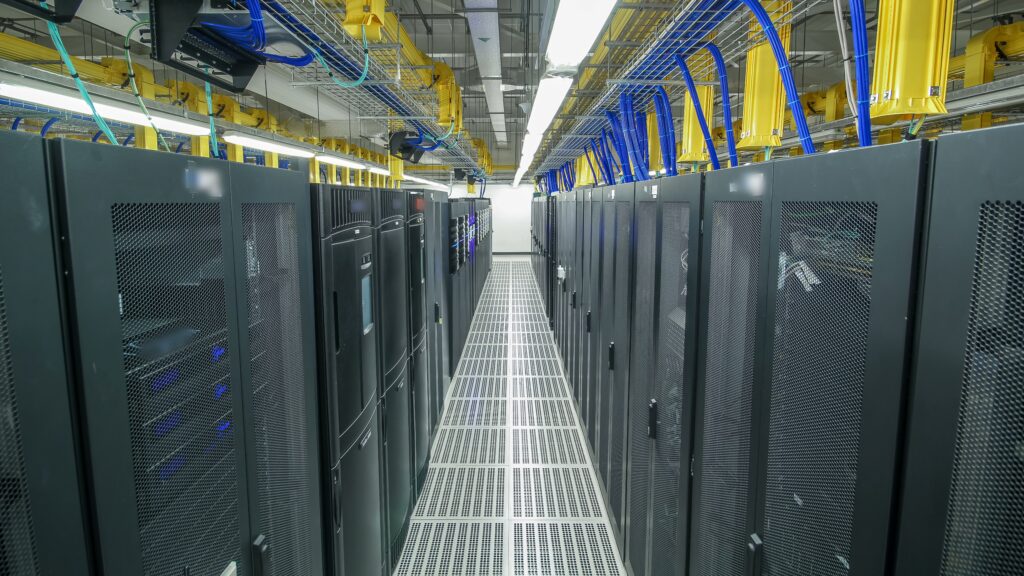
Data centers are big “data warehouses” that contain hundreds of servers that store and compute data. When you upload something to “the cloud”, you are really uploading it to a server in a data center.
In an age where much of our lives take place online, we need data centers because they create large networks of different servers that can be accessed remotely. This makes it quick and easy to store and retrieve data from basically anywhere in the world.
New technologies, especially artificial intelligence (AI), are increasing demand for data storage and many more data centers are being built as a result. The need for bigger data centers is also increasing. Large “hyperscale” centers contain more than 5,000 servers and can cover millions of square feet.
How do data centers impact our communities?
The biggest concerns about data centers stem from their massive water and energy needs. Because computer servers get hot when they run (the same way a laptop gets warm when it sits in your lap), they use water cooling systems to keep the servers from overheating. In facilities with hundreds or thousands of servers, that requires a lot of water. It’s estimated that the data centers that already exist and are planned in Georgia will require about 27 billion gallons of water per year. That’s the same amount of water that 560,000 people would use in one year.
Data centers rely on the same fresh drinking water that we do, which can put a huge strain on local water supplies. Residents of Newton County, Georgia reported that their wells filled with sediment and their taps stopped running shortly after a new data center was constructed nearby. Using excessive fresh water can harm local waterways, endangering fish and local wildlife. The cooling systems are also loud, and residents who live near data centers complain of a constant humming noise. Noise pollution is linked to sleep disturbances, learning problems, high blood pressure, and heart disease. It may also affect mental health. The noise pollution from cooling systems may also negatively impact birds and other wildlife in addition to humans. Data centers also produce wastewater that contains pollutants that many municipal wastewater treatment facilities don’t test for or eliminate.
Data centers are power hogs. In one year, a hyperscale data center can use as much electricity as 100,000 homes. This strains our current grid and generation capacity. The new power lines, infrastructure, and electricity generation to support the centers could drastically raise power bills for residential customers.
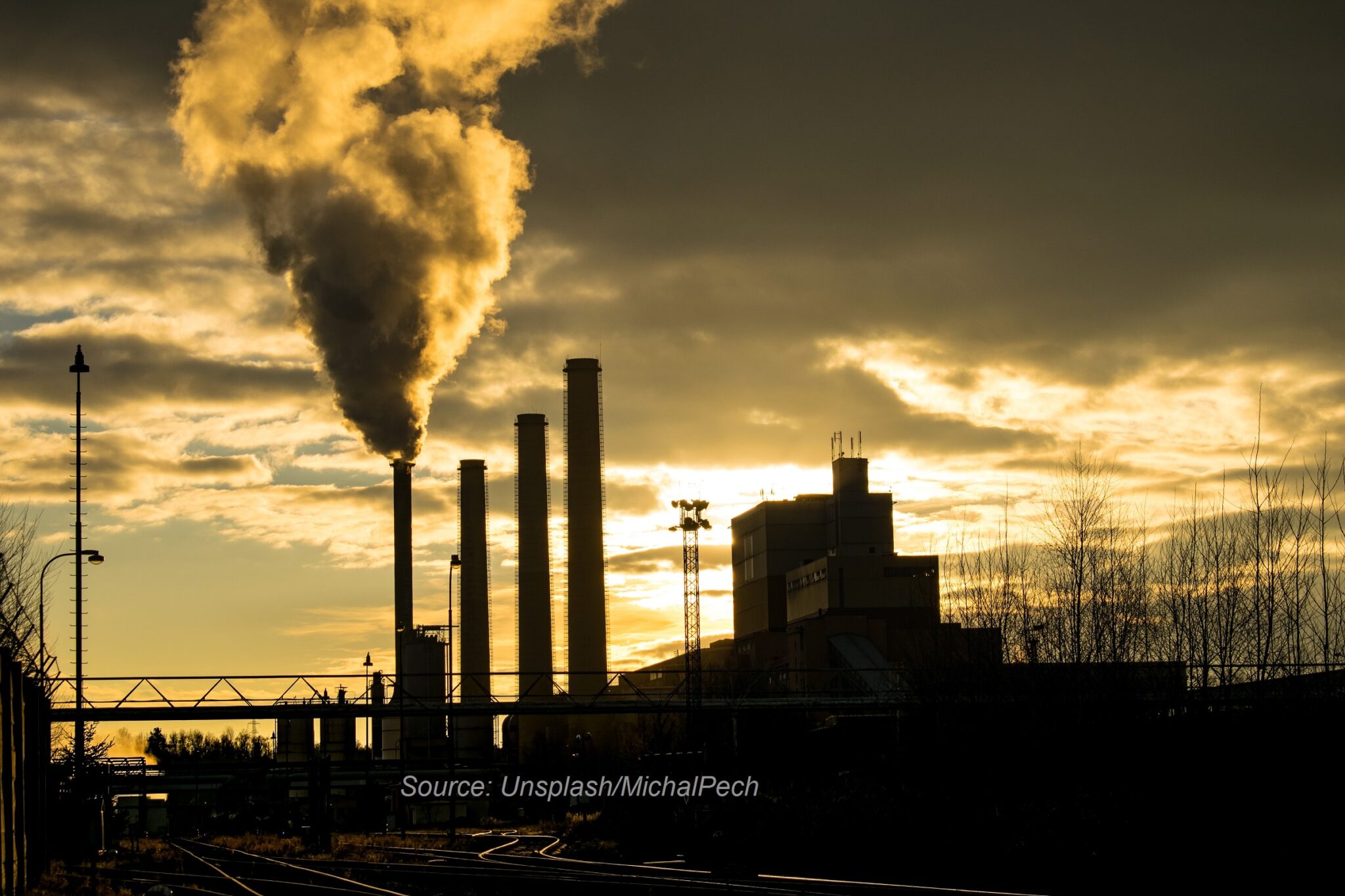
Data centers are also major contributors to air pollution. Because they require so much energy, states with data centers are scrambling to increase their energy production quickly. In Georgia, this will mean using more dirty fossil fuels like coal and methane gas, which contribute to climate change and cause air pollution that makes us sick. When power outages occur, most data centers also rely on diesel-run generators to make sure they can continue operating. Diesel exhaust is one of the dirtiest kinds of fossil fuel air pollution. It contains over 40 cancer-causing toxins and is very harmful to our health.
Dirty fossil fuel plants are often located near neighborhoods where Black, Indigenous, and other people of color live. In the U.S., Black people face the highest mortality rates due to fossil fuel air pollution. Now, data centers are being built in or near Black neighborhoods, adding another burden to communities that are already suffering from systemic environmental racism.
Data centers and Georgia Power
In December 2025, the Georgia Public Service Commission (PSC) ununanimously voted to allow Georgia Power to increase energy production by an incredible 10 gigawatts, mostly to power new data centers. That’s five times the energy produced by the Hoover Dam, or enough to power all of New York City. About 5,900 megawatts of energy production will come from polluting gas power plants, with plans to build five new gas power plants in Georgia. This decision ignores decades of science that shows that methane gas harms our planet and us.
This energy expansion will also be expensive for Georgia Power customers. Even though Georgia Power says that data centers will pay “their fair share” for the energy they use, residential customers (us!) will pay the costs of building new power plants. In other words, Georgia Power and the PSC are asking us to pay higher utility bills for dirty energy to power data centers. It’s estimated that Georgia Power’s energy expansion projects will cost Georgians over $50 billion, and bill increases will likely last until 2070.
To make matters worse, all of that new energy may not even be needed. A study from Greenlink Analytics and Science for Georgia found that there is only a 0.2% chance that Georgia actually needs 10 GW more energy. They found that it is much more likely that Georgia will only need about 3.5-5.5 GW of new energy production.
How methane gas impacts our health
Burning methane gas for energy produces PM2.5, tiny particles that are so small they can get into our bloodstream and cause inflammation throughout our bodies. PM2.5 has been linked to:
- Impaired brain development, lower IQ, higher risk of autism, and increased hospitalization rates in children with autism
- Damaged lung development in children and teens
- Respiratory distress in newborn babies
- Increased chances of developing dementia
- Bacterial infections
- Diseases that affect every part of our bodies!
Do data centers come with any benefits?
If data centers are so polluting and expensive, why do some counties want them to be built in their communities?
There are two main reasons that communities may welcome new data centers: Tax revenue and jobs. Data centers can provide valuable tax revenue to communities, but many states offer them big tax breaks. In 2025, Georgia missed out on $474 million in tax revenue as a result of tax exemptions. Over the same year, data centers brought in about $34 million in tax revenue from construction and about $7 million in tax revenue from operations.
Although data centers bring a lot of temporary construction jobs while they are being built, once the facilities are finished they actually provide very few permanent positions. Because data centers aren’t actually creating anything, they are just holding servers, they don’t require many staff. Even very large data centers usually employ less than 100 people. For reference, the average Walmart store in Georgia employs about 280 people.
What should we do?
- Understand the real impacts of data centers and talk to people about them. For more great resources, check out AI Now, Science for Georgia, Southern Environmental Law Center, and Sierra Club.
- Attend community meetings about data centers if one is planned for your town. This is a great time to advocate for community concerns.
- Try to limit how much you use AI. Reducing how much we rely on AI can help reduce the number of data centers we need. Check out the Minus AI campaign for practical tips and resources.
- Talk to your local and state representatives about your concerns and urge them to pass local ordinances and state legislation.
- For a full data center advocacy guide, check out this great resource from our partners!