
Did you know that five people control your utilities?
And this year, you have the opportunity to vote for two of them!
The Georgia Public Service Commission (PSC) is a group of five elected officials responsible for regulating electricity, natural gas, and telecommunication utilities in the state of Georgia. The PSC is the only group with the ability to regulate Georgia Power, so the decisions they make directly impact how much people in Georgia pay for electricity and other utilities and determine how much fossil fuels Georgia Power burns. According to their website, the mission of the PSC is to “ensure that consumers receive safe, reliable, and reasonably priced telecommunications, electric, and natural gas services”.
Why clean energy matters
Fossil fuels, such as coal, oil, and natural gas, are high in carbon. When fossil fuels are burned, they release carbon dioxide into the air. This carbon dioxide traps heat in Earth’s atmosphere, causing climate change. Climate change causes extreme weather events, such as heatwaves, hurricanes, and other dangerous storms.
The stripes below represent global temperatures from the 1850s to today. Blue stripes indicate cooler temperatures, and red indicates warmer temperatures. Notice how we’ve had a lot more red temperatures lately? That’s because global average temperatures are increasing, which is causing more extreme weather that threatens safety and health.

And burning fossil fuels doesn’t just affect the environment; it’s also devastating for human health. Pollution caused by fossil fuels causes at least 15% of all deaths in the U.S. They affect our health from before we’re born until we’re seniors. Pollution from fossil fuels causes premature birth, damages children’s lungs, and impacts mental development and I.Q. Burning fossil fuels causes lung disease, heart disease, stroke, and dementia, as well as many other chronic health conditions.
The PSC and Your Power Bills
The PSC gets to decide where your power comes from AND how much you pay for it. Right now, about 65% of Georgia Power’s energy comes from fossil fuels, and only about 20% comes from clean, renewable energy sources. But Georgia’s coal plants are getting old, and continuing to operate them costs more than it would cost to build new solar infrastructure. However, Georgia Power has a “cost-of-service” delivery model, which means that the energy rates they charge include both the costs of the energy and the costs of building and maintaining power plants. Most of their earnings come from building and maintenance, and they actually make more money if their plants are less efficient. Unfortunately, that means we have to pay for the maintenance on old, dirty, inefficient plants.
The current PSC has allowed Georgia Power to keep old coal plants open past the point they were supposed to close. Despite thousands of Georgians saying that they want more clean energy, the current PSC has not pushed for more renewable energy sources to be added.
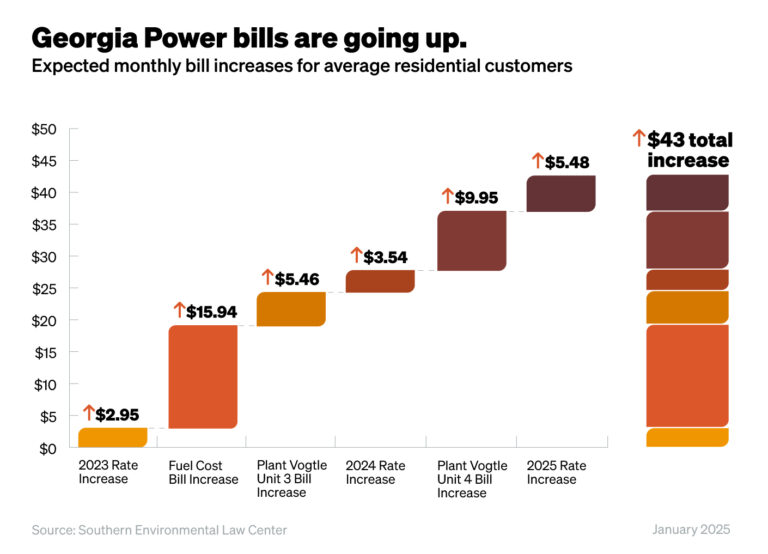
The PSC has also approved six rate increases in the past three years, and power bills have increased by an average of $43 a month as a result. Burning fossil fuels is expensive!
PSC Elections are this fall!
Public Service Commissioners are elected officials, so Georgia residents get a say in who serves on the Commission. Each Commissioner represents one district in Georgia, and they must live in the district that they represent. However, elections are held statewide, meaning that anyone can vote in elections even if the candidate is not from their district.
Even though PSC elections are not as well-known as other state elections, Commissioners have more direct influence on the lives of Georgians than most other public officials. Commissioners decide where your energy comes from and how much you pay for it.
Meet the Candidates
Remember, elections are statewide, so you can vote for both positions as long as you are a registered Georgia voter. You do not have to live in a candidate’s district to vote.




Voting FAQs
Q: Who can vote?
A: Any registered Georgia voter can vote in this election.
Q: How do I register to vote?
A: You can check your voter registration, register to vote, and find more voter resources at vote.org.
Q: When do I vote?
A: Election Day is November 4. Early voting is October 14 -31.
Q: Where do I vote?
A: Find your polling location and access voter guides here.
Q: Who should I vote for?
A: It’s up to you! Voting is a very personal choice, and it’s important that you vote for the candidate that you feel best aligns with your values. You can learn more about each of the candidates here.
Q: Why is it important to vote in this election?
A: Even though PSC elections are not as well-known as other state elections, these positions have more direct influence on the lives of Georgians than most other public officials. Commissioners decide where our energy sources come from, and how much we pay for them. Voting in this election is one of the most impactful things you can do to fight air pollution, climate change, and rising utility bills.
The Integrated Resource Plan
Every three years, the PSC votes on an Integrated Resource Plan (IRP) presented by Georgia Power. Each IRP has a 20-year forecast of energy generation and usage, including how much renewable vs. nonrenewable energy Georgia Power will use. During the IRP hearings, we can advocate for changes to the IRP before it is approved by the PSC. This gives us a major opportunity to make our voices heard and advocate for clean, healthy energy sources, rather than relying forever on dirty, unhealthy fossil fuels.
The most recent IRP was passed on July 15, 2025. You can find a summary of what was included in the IRP here. Because IRP reviews typically happen every three years, the next is scheduled for the spring of 2028.
How you can advocate for clean energy
The 2025 IRP process has finished, and the public comment period has ended. Right now, the best thing you can do to advocate for clean energy is vote in the PSC elections!