Mothers & Others For Clean Air was featured in this article about Bibb County’s new electric school buses. The article was written by reporter Margaret Walker and published in the Macon Telegraph. Read the original article in the Telegraph here.
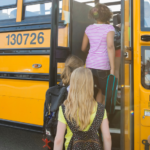
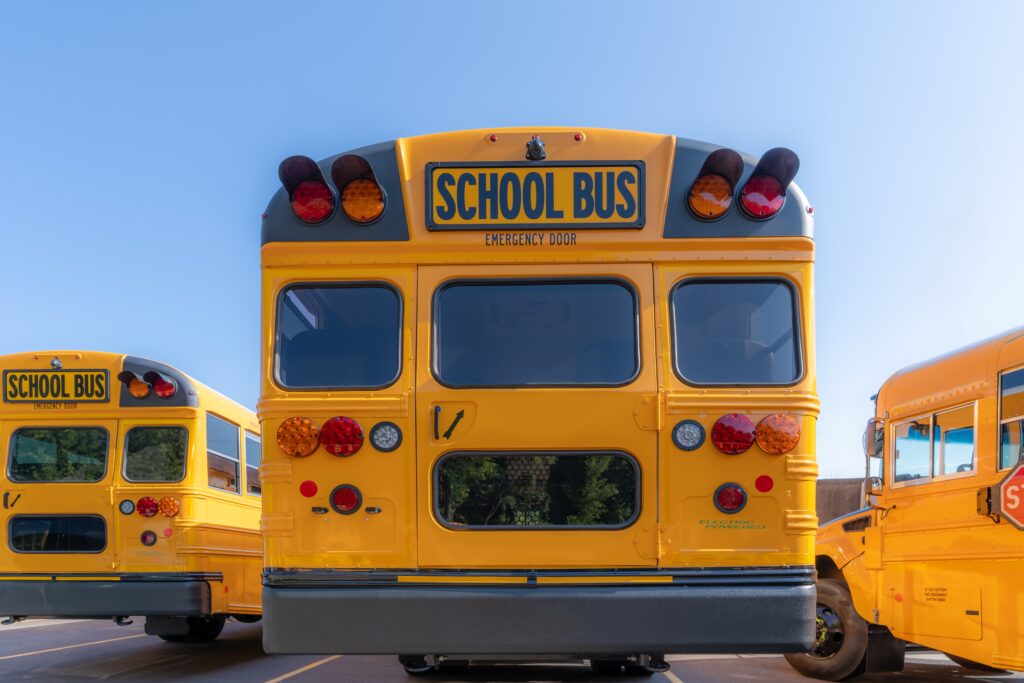
The Bibb County School District has updated and upgraded its bus fleet with 15 electric buses and 10 propane buses through a federal grant from the Environmental Protection Agency. The school district decide to seize the opportunity to improve its fleet for cost, environmental and health reasons. “We targeted propane buses because we have 11 years of data that supports significant operational savings (and) electric buses project to offer more operational savings,” said Anthony Jackson, executive director of transportation for Bibb County School District. “Propane and EVs emissions are much cleaner than diesel buses (and) funding was available to assist with the purchases.”
The EPA’s Clean School Bus Program awarded the county over $6 million to purchase the buses, Jackson said. The Clean School Bus Program was established under the Bipartisan Infrastructure Law of 2021, which allocated $5 billion over five years to help school districts replace old diesel-powered buses with cleaner, low-to-zero emission alternatives.
The primary goals of the program are to improve air quality and protect children’s health, particularly by reducing asthma and respiratory risks linked to diesel exhaust, as well as reduce greenhouse gas emissions and support environmental justice and economic opportunity, according to the EPA’s website. Diesel buses, harmful to both the environment and public health, contain over 40 known carcinogens, including arsenic, benzene and formaldehyde. The International Agency for Research on Cancer classifies diesel exhaust itself as a carcinogen, with older diesel buses releasing the most pollution. Bibb County falls in the highest tier for pediatric ER asthma related visits, according to the Georgia Department of Health. Bibb County is also the second highest county in the state for ozone, according to the American Lung Association. Electric school buses produce no tailpipe emissions, meaning they eliminate the particulate matter pollution that diesel buses release into the air. By reducing exposure to these pollutants that can harm lung development and trigger asthma, electric buses help protect children’s health and allow them to ride to school in a cleaner, safer environment, according to Morgan Johnson-Toth, spokesperson for Mothers and Others for Clean Air, a nonprofit dedicated to protecting children’s health by reducing the impacts of air pollution. “Because electric school buses produce no particulate matter pollution (and diesel buses do), replacing diesel buses with electric school buses will reduce the amount of pollutants being released into the environment,” Johnson-Toth said in an email. “Particulate matter pollution damages lung development in children, so reducing exposure by replacing diesel school buses with ESBs will help bus riders grow and thrive.”
All 25 of the new buses will be fixed-route buses. The propane buses have been delivered and are already in operation, while the electric buses should arrive by late September or early October and be operational no later than mid-December, according to Jackson. The school district already has 152 propane buses, according to Jackson. These will be the fleet’s first electric buses.